Once a 73-acre arable farm, the site received planning permission in 2016 for the construction of a warehousing and logistics hub comprising three distribution units covering approximately 1.3 million square feet. As part of the planning requirements, a proportion of the site was dedicated to landscaping and biodiversity enhancement.
Today, under the management of idverde and with specialist ecological support from the RSPB, Bardon II has become a growing example of how sustainable grounds maintenance can help create valuable habitats alongside commercial development.
Managing the site with biodiversity in mind.
Since September 2022, idverde has been responsible for the site’s grounds maintenance, including grass cutting, shrub pruning, hedge maintenance, weed control, and litter management.
The maintenance programme follows a biodiversity-led approach, with extensive areas of grass left to grow naturally, minimal use of chemicals, and green waste repurposed into compost for the site.
Recognising the ecological significance of the area, idverde worked closely with Ross Bray, RSPB Biodiversity Advisor and partnership Biodiversity Advisor for idverde in the Midlands, to develop a Biodiversity Enhancement Plan.
A Biodiversity Enhancement Plan.
Together, idverde and the RSPB developed a comprehensive plan to enhance habitats across the site and support local wildlife.
Key initiatives include:
- Underground hibernacula for small animals
- Bee banks to support pollinators
- Seed crops to improve foraging opportunities for birds and insects
- Pole-mounted kestrel nesting boxes
- Wildflower banks using native species
These measures aim to increase biodiversity while supporting the long-term ecological value of the site.
Supporting wildlife through sustainable management.
The Biodiversity Enhancement Plan also introduced changes to the site’s maintenance regime.
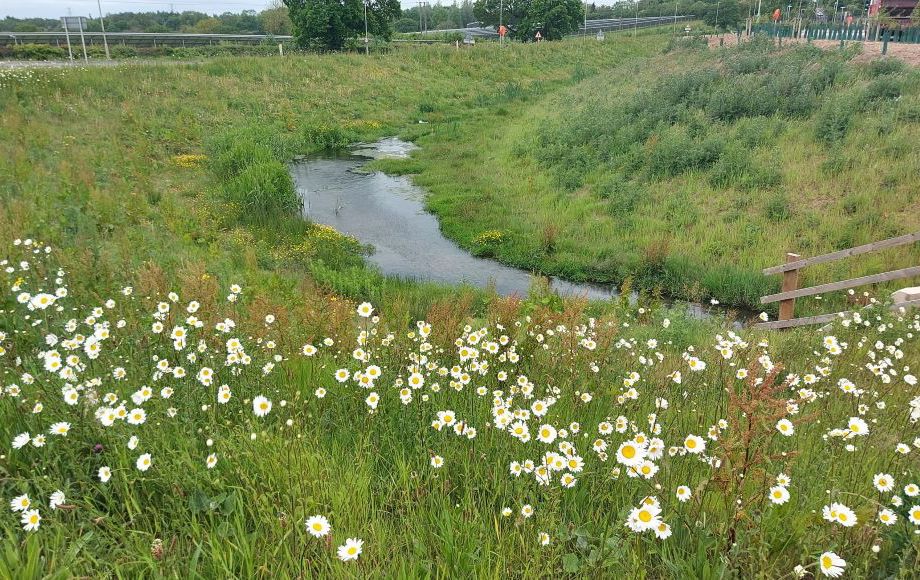
Buffer strips have been established around hedgerows, with selected grassland areas left uncut for extended periods to encourage natural habitats. Native wildflower seed mixes have been introduced on grass embankments to provide valuable nectar sources for pollinators.
To support wildlife throughout the year, winter seed and cover crops have also been planted, providing food and shelter for birds and insects during the colder months.
Enhancing existing natural features.
Bardon II already incorporates Sustainable Urban Drainage Systems (SuDS) and storm retention basins.
idverde’s management approach seeks to further enhance these areas by increasing the diversity of wetland habitats. Species such as the grey wagtail have already been observed using these areas for feeding.
The site’s approximately three hectares of woodland are also being managed to improve biodiversity through habitat piles, bat boxes, nesting boxes, and the creation of standing deadwood to provide valuable habitats for birds and other wildlife.
Monitoring biodiversity.
Wildlife and habitat surveys are carried out regularly by local RSPB Volunteer Biodiversity Surveyors, helping monitor the success of the site’s conservation measures and identify priority species.
Among the wildlife recorded on site are brown hares, highlighting the resilience of nature alongside industrial development.
Visitors and employees are encouraged to explore the site’s circular walking route and engage with its evolving habitats. Future plans also include practical conservation activities involving employees working at the distribution centres.
A model for future projects.
Following the success of the Bardon II project, idverde has been asked to replicate similar biodiversity enhancement initiatives across other managed sites.
The project demonstrates how collaboration between grounds maintenance specialists and ecological experts can help balance commercial development with long-term environmental stewardship, creating spaces where businesses and nature can thrive together.